Triage · Hunt · IR
Analyse evidence
Use when you have a message, event, command, process or behaviour and need a defensible candidate mapping.
ATT&CK Workbench · first-use guide
This is a decision workflow, not a technique colouring exercise. Start with the job you need to do, preserve what is observed versus inferred, and only claim the capability or attribution your evidence supports.
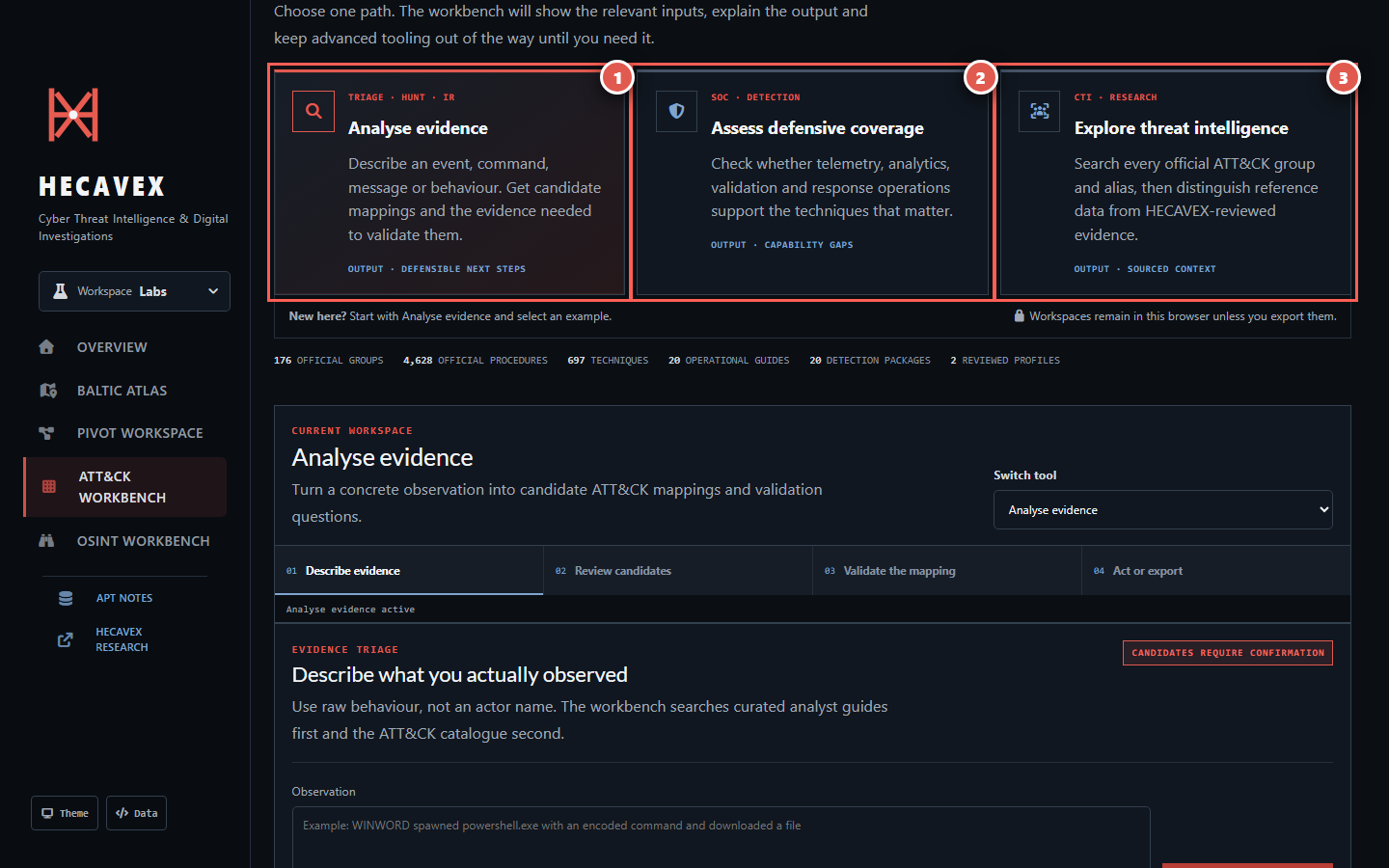
The first screen asks what decision you are trying to make. If you already know a technique ID, that still does not tell you which analytical job needs doing.
Triage · Hunt · IR
Use when you have a message, event, command, process or behaviour and need a defensible candidate mapping.
SOC · Detection
Use when you need to separate telemetry, analytic, validation and operational readiness.
CTI · Research
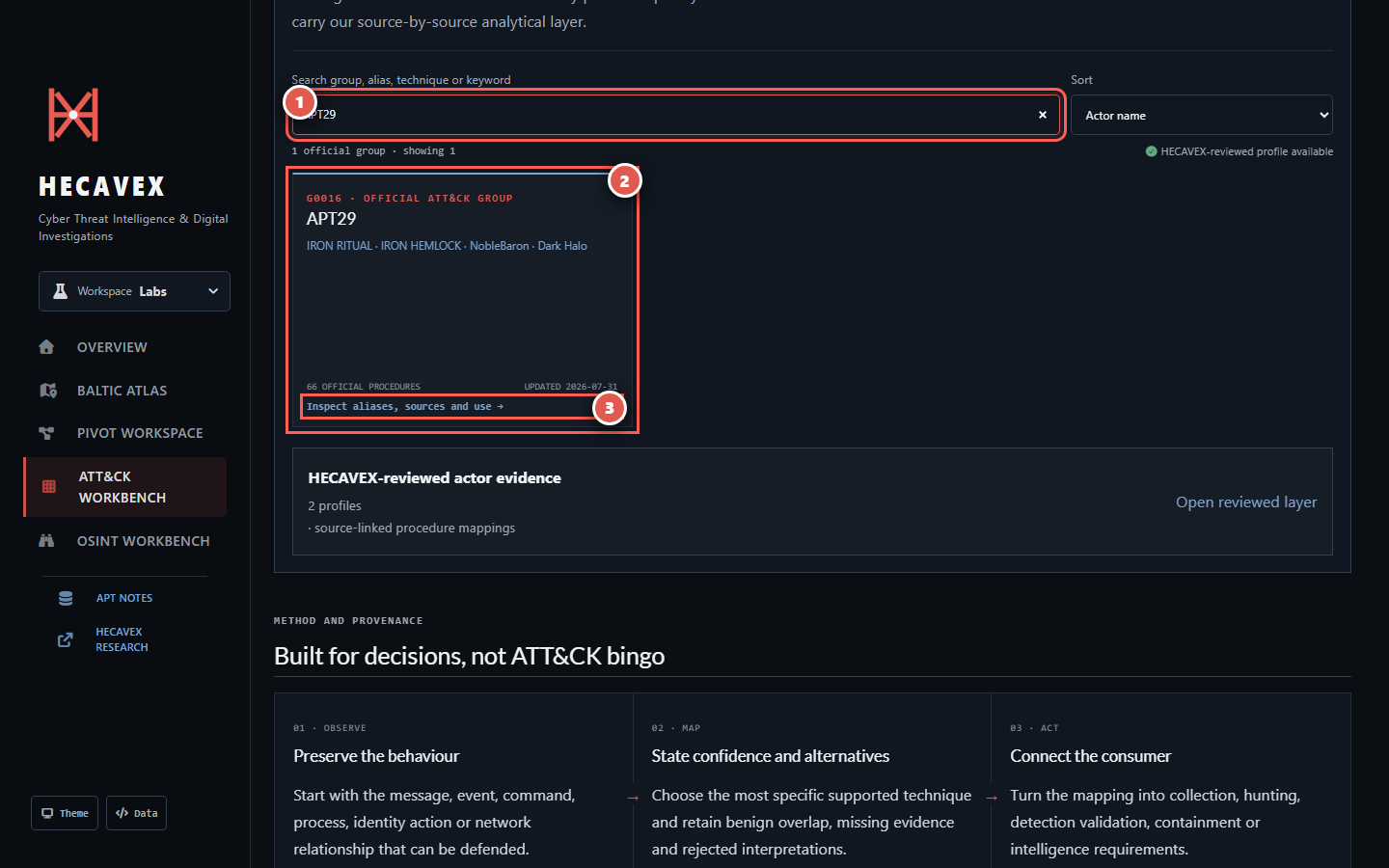
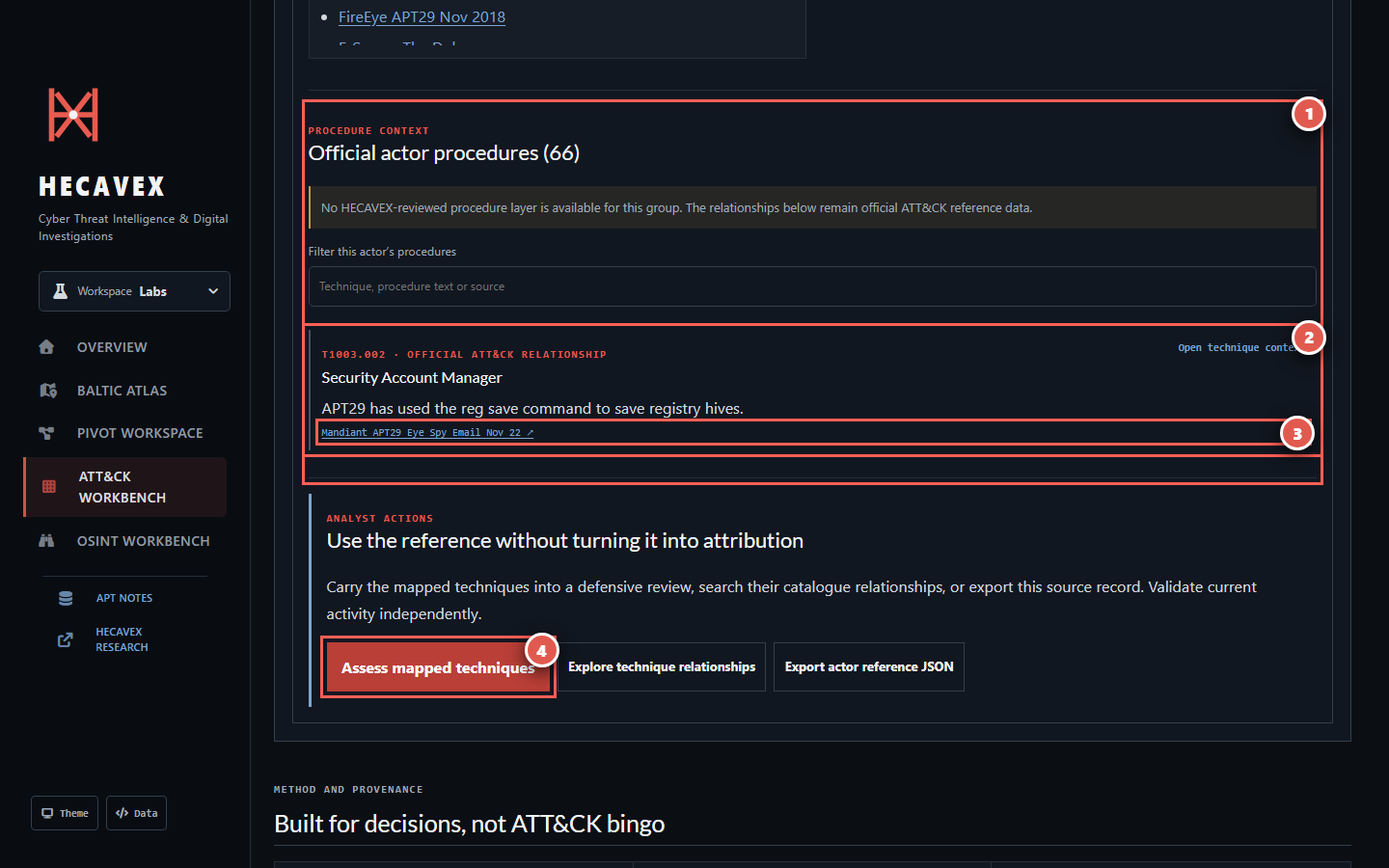
Use when you need official group, alias, procedure and source context without assuming current attribution.
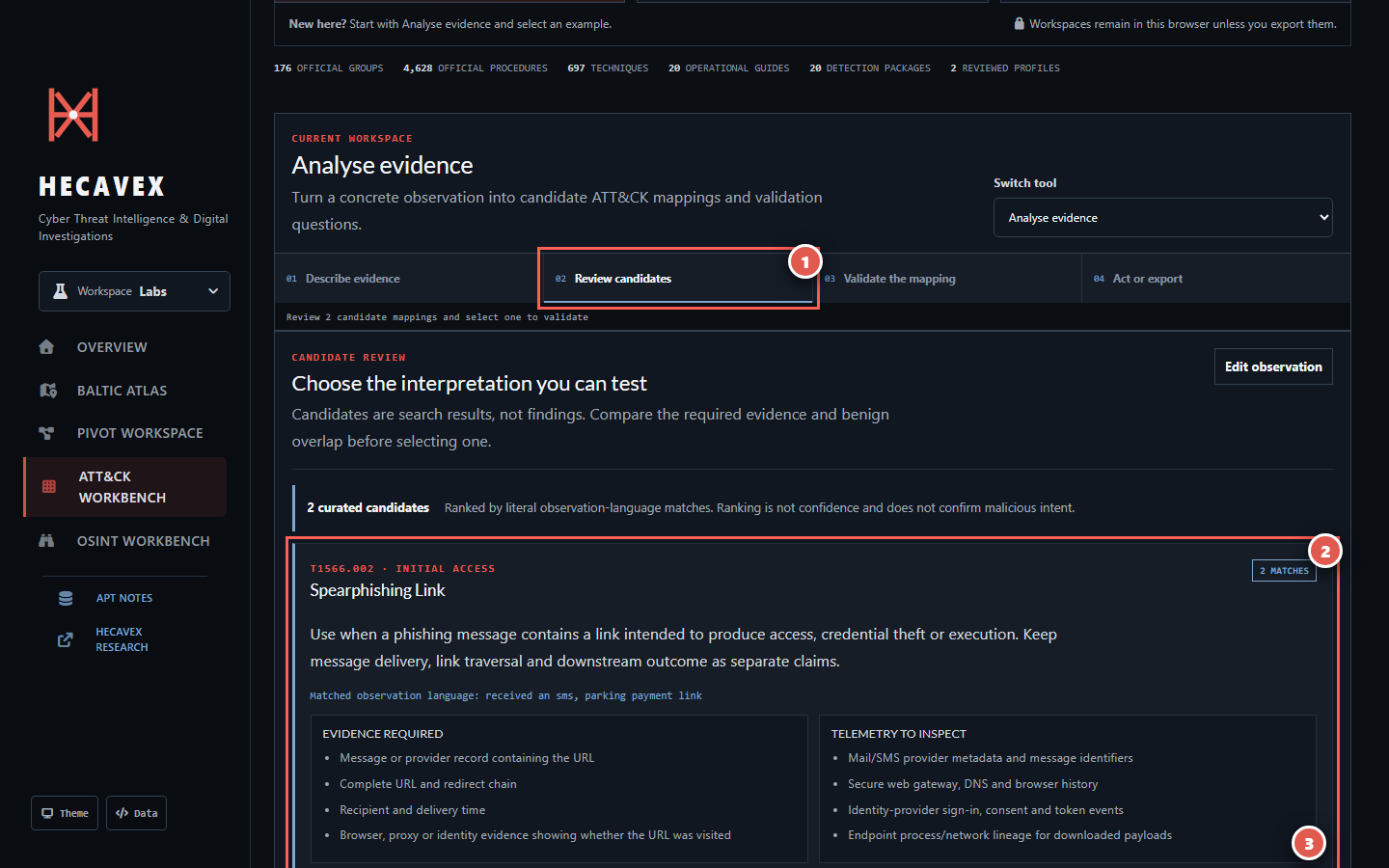
Describe what happened without putting an actor name or preferred technique into the observation. The workbench ranks possible interpretations, then requires you to record supporting evidence, gaps and a competing explanation.
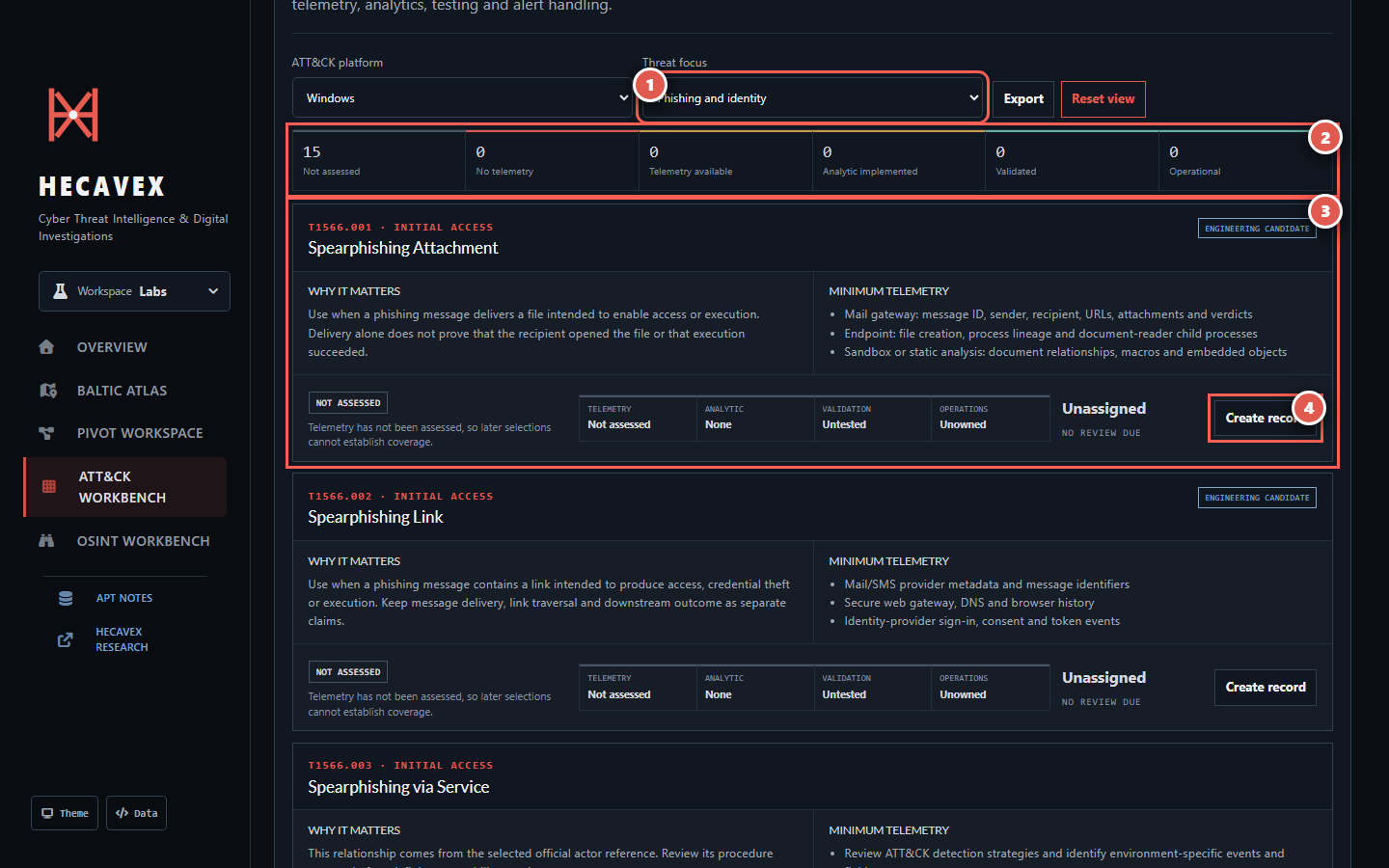
Coverage is only meaningful inside a documented environment and threat scope. A rule name alone cannot prove collection quality, validation or an operational alert path.
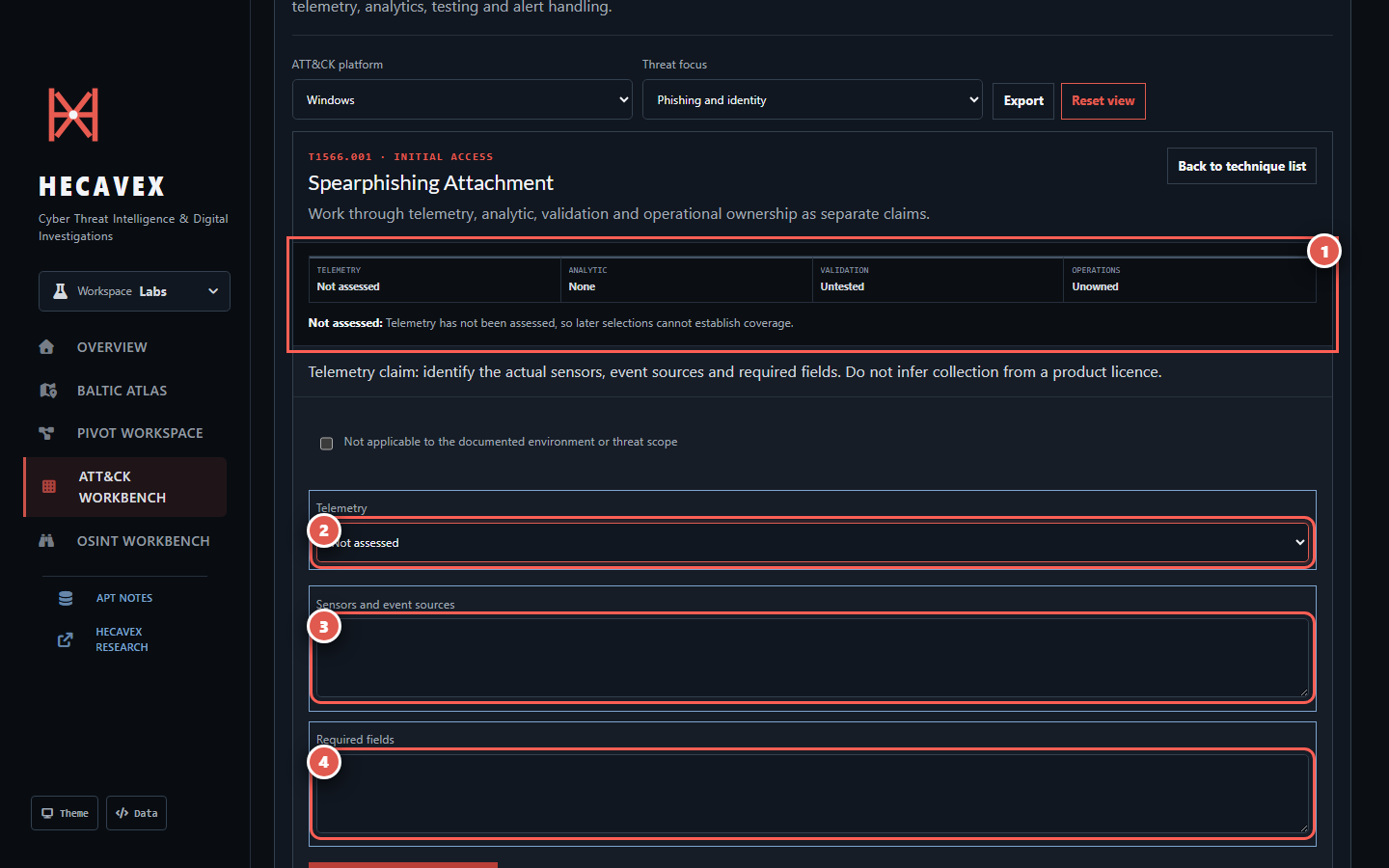
Neutral
No one has yet established whether the telemetry exists. Later selections cannot establish coverage.
Gap
The required collection was checked and recorded as absent. This is a real capability gap, not a default.
Progress
Collection or an analytic exists, but the later claims remain incomplete. Keep each claim separate.
Outcome
Validated requires a representative test. Operational additionally requires an assigned, tested alert-handling path.
The directory covers every active official Enterprise ATT&CK group. A smaller, explicitly marked HECAVEX-reviewed layer exists only where source-by-source review has been performed.
These boundaries apply no matter which workflow you use.
A search result becomes an assessment only after evidence, gaps, alternatives and confidence are recorded.
A historical public relationship does not prove the same actor caused the event in front of you.
An engineering candidate still needs local schemas, logic, tests, tuning, ownership and lifecycle controls.
Fewer validated, operational capabilities are more useful than a large matrix of unsupported green boxes.